

Impact Where It Matters Most – The Fashion Pact’s Strategic Evolution


The case for change
We have reached a pivotal moment in the transition to a nature positive and net zero future for fashion.
Significant progress has been made, yet rising urgency, increasing public and policymaker pressure, and the threat of climate-related impacts to supply chains require a step change in collective action. Brands are being held to a higher standard by regulators and the public, while also expected to deliver strong performance in a time of economic and political volatility. We are evolving our Impact and Reporting Strategy to meet these challenges head on.
Our guiding principle remains the same as when we launched in 2019 – individual companies cannot succeed alone in addressing the climate and nature crises; collaboration is needed now, more than ever.
Over the last five years, thanks to our committed members, best-in-class partners, and ambitious allies, we have rallied a significant section of the fashion industry behind a vision for a net zero and nature positive future. We have taken meaningful steps to bring that vision to life through the power of collaboration. We have convened industry leaders around shared frameworks to raise ambitions and accelerate action. Working closely with strategic partners, we have supported knowledge sharing and capacity building, developed practical tools and guidance, and helped catalyse investment across the value chain.
Now, we must build on this momentum — scaling our impact where it matters most, addressing the systemic barriers standing in the way.

Why it was time for us to move beyond brand-level targets
When the Fashion Pact launched, we needed a fast and pragmatic way to drive alignment across diverse companies, as well as a starting point to measure progress and create accountability.
To do this we invited members to commit to individual, brand-focused targets on climate, biodiversity, and oceans. It was an important first step, and for many members, it was the first structured pathway towards ambitious environmental action.
We measured progress through third-party aggregation of individual company data. This provided some useful initial insights, however, as we began to evolve our approach and deliver impact on the ground, there was a growing disconnect between these brand-level targets and the realities of our collaborative work.
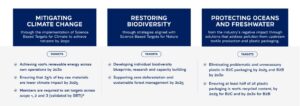
Fig. 1 The Fashion Pact’s original targets focused on individual brand-level progress that did not measure the impact of the Pact’s efforts.
To ensure greater transparency and provide more meaningful insights as we grow, we have now moved from individual brand-focused targets to a set of Collective Ambitions.
These give a clear vision of what is needed in each of our four action areas; nature, lower impact materials, lower impact production, and renewable energy.
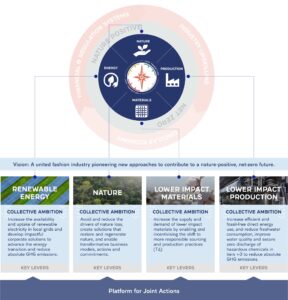
Fig. 2 Collective Ambitions provide a clear vision of what needs to be achieved in each of our four action areas.
Third-party, voluntary reporting and aggregated brand-level metrics has switched to direct reporting on metrics that measure the performance and impact of The Fashion Pact. This includes Joint Action performance indicators that set out each initiative’s impact on the ground and demonstrate progress against the Collective Ambitions.
Quantitative measures such as GHG reductions, renewable energy uptake, and capital investment, will be combined with qualitative data that measure the performance of The Fashion Pact in mobilising leadership and creating the trusted environment necessary for collaboration, core elements of our mission.
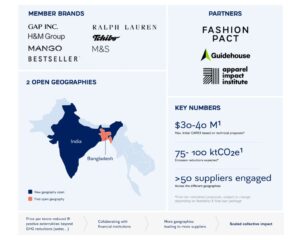
Fig. 3 Third-party aggregated brand-level metrics have been replaced by direct reporting on metrics that measure the performance and impact of The Fashion Pact – this is an example with key data points for the Future Supplier Initiative (data from December 2025).
Key levers to scale impact
The type of resilient, patient, and active collaboration needed to achieve our Collective Ambitions is not easy. It requires an expert understanding of the entire value chain, as well as new levels of trust, support and clear direction, to ensure everyone can play their fullest part.
To achieve this, and ensure the most meaningful impact on the ground, we have shaped supporting pathways and identified key levers for success. This work is grounded in science and evidence-based approaches, developed in close collaboration with our members as well as key experts and industry organisations. Together, this collective effort helps to define our most effective role and ensure our work is complementary to other industry efforts.
As a result, our Joint Actions serve as a platform to deliver progress where the fashion industry is struggling to transition or yet to act.
By combining CEO-leadership, shared knowledge, and collective resources with the best external expertise, they allow us to dive deep into the practical realities of industrial transformation, targeting interventions that can drive the greatest possible impact across the value chain.
This is not theory, it is an approach that has already led to significant impact. Our existing Joint Actions; Unlock, the Future Supplier Initiative, and the CVPPA, show how collaboration can help deliver solutions beyond what is possible for individual company-led programmes. Our new approach leverages best practice and learnings from these successful projects so we can scale them and develop new initiatives.
We will continue to push for individual member action too – for example, with our requirement that every member commit to or establish Science-Based Targets (SBTs) across scopes 1, 2, and 3.
Looking Ahead
From the start, our destination has been clear: a nature positive and net-zero fashion industry. With this enhanced focus we have an opportunity to drive a new era of collective impact.
Lower Impact Production
Our collective ambition is to increase efficient and fossil-free direct energy use, and reduce freshwater consumption, improve water quality and secure zero discharge of hazardous chemicals in tiers 1-3 to reduce absolute GHG emissions.
To achieve this we must address the fragmented nature of fashion production, the financial challenge of transition (particularly at the factory level), and difficulties in reporting and data accuracy.

Spearheaded by The Fashion Pact, the European Accelerator is bringing together leading fashion groups and houses and drawing on perspectives from sector organisations such as Confindustria Moda and Camera Nazionale della Moda Italiana, to drive collective action aimed at lowering emissions, boosting efficiency and building long-term resilience in fashion supply chains.
Work has begun in Italy, where there is a concentration of raw material processing, dyeing, tanning, spinning, and finishing, particularly for luxury brands. The European Accelerator is initially engaging the luxury fashion industry around an optional and non-exhaustive questionnaire for suppliers on relevant environmental data, aiming to strengthen the quality and consistency of environmental metrics while easing the administrative burden of reporting on suppliers.
Looking ahead, we want to increase capacity-building efforts among suppliers, and identify opportunities for efficiency improvements and renewable energy uptake. With finance, representing a major hurdle for supply chain decarbonisation, the European Accelerator aims to open pathways for suppliers to access the investment needed to adopt cleaner technologies and drive long-term transformation.
At the same time we are scaling The Future Supplier Initiative (FSI). Having helped to develop and launch the initiative in 2024 in collaboration with the Apparel Impact Institute and Guidehouse, FSI is continuing to scale its work to drive deep decarbonisation in the apparel sector through collective finance.
It supports brands and suppliers in meeting their Science-Based Targets by developing and funding projects that ease suppliers’ financial burden, with participating brands helping to de-risk loans and enable the transition. Currently operating in Bangladesh and India, with 7 participating brands, we want to increase its impact by rolling out to other geographies, including Vietnam and China, bring more brands on board, and implement an SME model.
Lower Impact Materials
Our collective ambition is to increase the supply and demand of lower impact materials by enabling and incentivising the shift to more responsible sourcing and production practices.
To achieve this we have identified two key areas where The Fashion Pact can have a significant impact; increasing the supply and demand of recycled materials (coupled by a reduction in virgin, fossil-based materials) and an increase in the production and use of sustainably-sourced renewable materials.

The supply and demand of recycled materials is currently disconnected, leading to several barriers. These include difficulties for brands securing reliable, large-scale supply of next-gen materials, manufacturers struggling with costs and uncertainties of working with unfamiliar materials, and innovators lacking commercial traction to scale breakthrough technologies efficiently. The lack of demand visibility and fragmented supply chains also make it difficult to optimise production costs and create price stability.
The Fashion Pact has been working with Fashion for Good to explore interventions aimed at scaling textile-to-textile recycled and next-generation materials through a collaborative effort that reinforces industry circularity. The Ellen MacArthur Foundation helped shape the initiative and remains strategically engaged as it progresses. While exploratory work is still ongoing, the ambition is to streamline collective demand potential for these materials – including commitments – and to support their integration across the supply chain.
The initiative is also scoping work to understand how financing mechanisms as well as policy and regulatory measures can accelerate the scaling of textile-to-textile recycled and next-gen materials. The Ellen MacArthur Foundation is expected to play a leading role in the policy workstream once the first phase of the project is completed.
In addition, the Unlock Programme – launched by the Fashion Pact in partnership with the climate consultancy 2050 in 2023 – is continuing to scale decarbonisation solutions in the cotton supply chain under the leadership of the non-profit Future Earth Lab.
This scaling is supported by a cutting edge data management system which automates data submission, checking and quantification processes and uses satellite imagery to verify farmer activities and contextualise impact. Brand participation and claims structures have been simplified, membership has been opened for new brands to join, and Unlock is now creating innovative financial solutions to maximise investment in farmer impact reduction. This includes options to de-risk and facilitate private sector investment in farmer technology and practice change.
The next phase of programme scaling will see expansion of the Unlock programme to new countries and materials, as well as partnering with additional certification schemes and farmer programmes globally.
Nature
Our ambition is to avoid and reduce the drivers of biodiversity loss, create solutions that restore and regenerate nature, and enable transformative business models, actions and commitments.
Accelerating progress will require clarity on how to prioritise and implement actions across complex global operations and supply chains and overcoming today’s limited visibility and engagement across complex supply chains.

Farmers and raw material producers often bear the costs of transition to more regenerative practices that deliver benefits for nature. The Fashion Pact is exploring opportunities for its members to contribute towards nature positive ambitions with key partners to ensure key challenges are addressed and key opportunities are taken up.
The foundations of this work have been laid through our Transforming the Fashion Sector with Nature initiative, which was developed with GEF, CI Textile Exchange and other industry organisations in 2023, with two main objectives.
Firstly, to provide guidance and capacity building so brands can understand their impact on nature, develop strategies to address them, and catalyse investment in key landscapes.
Secondly, to encourage company participation and investment in key commodities to support promising on-the-ground platforms and improve sourcing pathways for these materials.
The project aimed to get 20 Fashion Pact companies to develop biodiversity strategies aligned with Science-Based Targets for Nature. By project close, 52% (25) of TFP companies reported already established biodiversity strategies.
A number of tools supporting the transition to nature positive outcomes have also been developed through the work. These include the Biodiversity Strategy Tool Navigator (a site that provides relevant tools and resources for each step in the journey curated specifically for the fashion sector); The Fashion Nature Risk Lens (an interactive tool to help fashion brands assess the biodiversity impact of their subsector and material usage); and Fashion Sector Future Scenarios (a set of analyses and StoryMap that examine the potential future nature impacts of the fashion sector based on certain sustainability decisions).
Renewable Energy
Our collective ambition is to increase the availability and uptake of renewable electricity in local grids and develop impactful corporate solutions to advance the energy transition and reduce absolute GHG emissions.
After conducting market assessments in eight priority countries and engaging members on their individual renewable energy goals, priorities, and existing initiatives, we have identified several solutions that could increase supply and demand of renewable electricity in key manufacturing countries. These would build on what has already been achieved through The Fashion Pact Collective Virtual Power Purchasing Agreement (CVPPA), launched in 2023.

This landmark deal brought together 12 brands of different sizes in a shared multi-buyer contract aimed at increasing the availability of renewable energy in own operations and accelerating renewable electricity adoption by investing in new clean energy infrastructure. It will add more than 160,000 MWh per year of renewable electricity to the grid. The solar asset is currently being built and is expected to be live in 2026 – providing renewable electricity across Europe for the next 10 years.
Now it is essential to tackle Scope 3 emissions, where the majority of the fashion industry’s impact lies. By taking a collective approach, such as launching aggregated VPPAs or collective certificate solutions we can enable Fashion Pact members to support the energy transition in key sourcing geographies.
Limited supply and policy constraints are also a barrier. Engaging with NGOs and other partners that advocate for better market accessibility and policy frameworks will be essential to unlock supply at the scale needed for long-term climate goals and over the coming months, we will explore each of these solutions in depth.