

Collective leadership: how collaboration creates resilience in uncertain times
Global uncertainty is rising. Geoeconomic confrontation, volatility, misinformation and disinformation, and societal polarisation are challenging not only short-term business operations but also long-term agendas, including climate and nature action.
When the World Economic Forum asked over 1,300 leaders from business, government, NGOs, and academia about the key themes shaping the next few years, more than half predicted a turbulent two-year horizon.
Yet environmental risks remain urgent. While the Global Risks report shows a decline in the short-term prioritisation of environmental threats1, the reality is stark: climate and nature-related impacts are rising across industries daily.
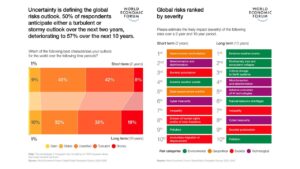
Fig. 1: WEF: Global Risks Report 2026 Infographics
For the world’s largest companies (S&P Global 1200), the projected cost of physical risk could reach $1.2 trillion annually by 2050.2 As Prof. Stephen Polasky, co-chair of IPBES’ latest biodiversity assessment, warns: “The loss of biodiversity is among the most serious threats to business.”3
Against this backdrop, collective action offers both resilience and advantage. Collaboration allows industries to tackle complex shared environmental challenges efficiently while strengthening individual operations.
As Inditex CEO Óscar García Maceiras, co-chair of The Fashion Pact steering committee, explains:
“Collective action is essential not only to reduce our environmental footprint, but also to improve efficiency and competitiveness across the industry.
When brands work in isolation, suppliers face multiple, sometimes conflicting requests that slow progress.
By aligning our goals, sharing tools, and collaborating, we can scale solutions faster and make the entire value chain more resilient.”
Watch
Our Steering Committee and member CEOs share their insights on the power of collaboration.
Why Collaboration Matters
Accelerates Implementation and Reduces Duplication
- Pooling resources and insights allows faster rollout than any single company could achieve.
- Shared methodologies and proven practices shorten timelines from pilot to scale.
- Collective action spreads the investment burden and ensures alignment, reducing duplicated effort across brands and suppliers.
Builds Supply Chain Efficiency and Resilience
- Competitors often share suppliers; unilateral actions can waste time and capital, when alignment would better serve the greater good.
- Aligned priorities let suppliers invest once in scalable solutions instead of multiple conflicting initiatives.
- Co-designed solutions boost resilience, reduce execution risk, and increase the likelihood of hitting targets.
Builds Governance Confidence and Reduces Risk
- CEO-level alignment transforms sustainability from a reputational concern into an operational mandate.
- Common frameworks clarify accountability and speed up decision-making.
- Coordinated progress improves credibility, reduces regulatory and reputational risk, and mitigates first-mover disadvantages while preserving differentiation.
Beyond its power to solve technical challenges, collaboration also recognises the human element of transition. As The Fashion Pact Executive Director and Secretary General Eva von Alvensleben sets out:
“Industry transformation is not simply a technical challenge, it is a human one.
It’s a careful balance of achieving agreement without sacrificing ambition, building the trust that allows innovation to flourish, building skills and inspiring action.
For every Joint Action we develop at The Fashion Pact, whether the focus is on supplier-level finance, through initiatives such as The European Accelerator and Future Supplier Initiative, or renewable energy with the CVPPA – we know tangible impact and success depends on the human factor.
That’s why creating space for CEOs to connect, exchange insights, reflect on shared progress, and align on where collective efforts can drive the greatest impact is so critical. It is about peers who face similar sustainability challenges coming together to act collectively on climate and nature to achieve things that none of us could do alone.”
Sources
[1] The Global Risks Report 21st Edition, World Economic Forum, January 2026
[2] For the world’s largest companies, climate physical risks have a $1.2 trillion annual price tag by the 2050s, S&P Global, April 2025
[3] Businesses Can Either Lead Transformative Change or Risk Extinction All Businesses Depend on and Impact Nature, IPBES, February 2026